The Fjeld Gallery
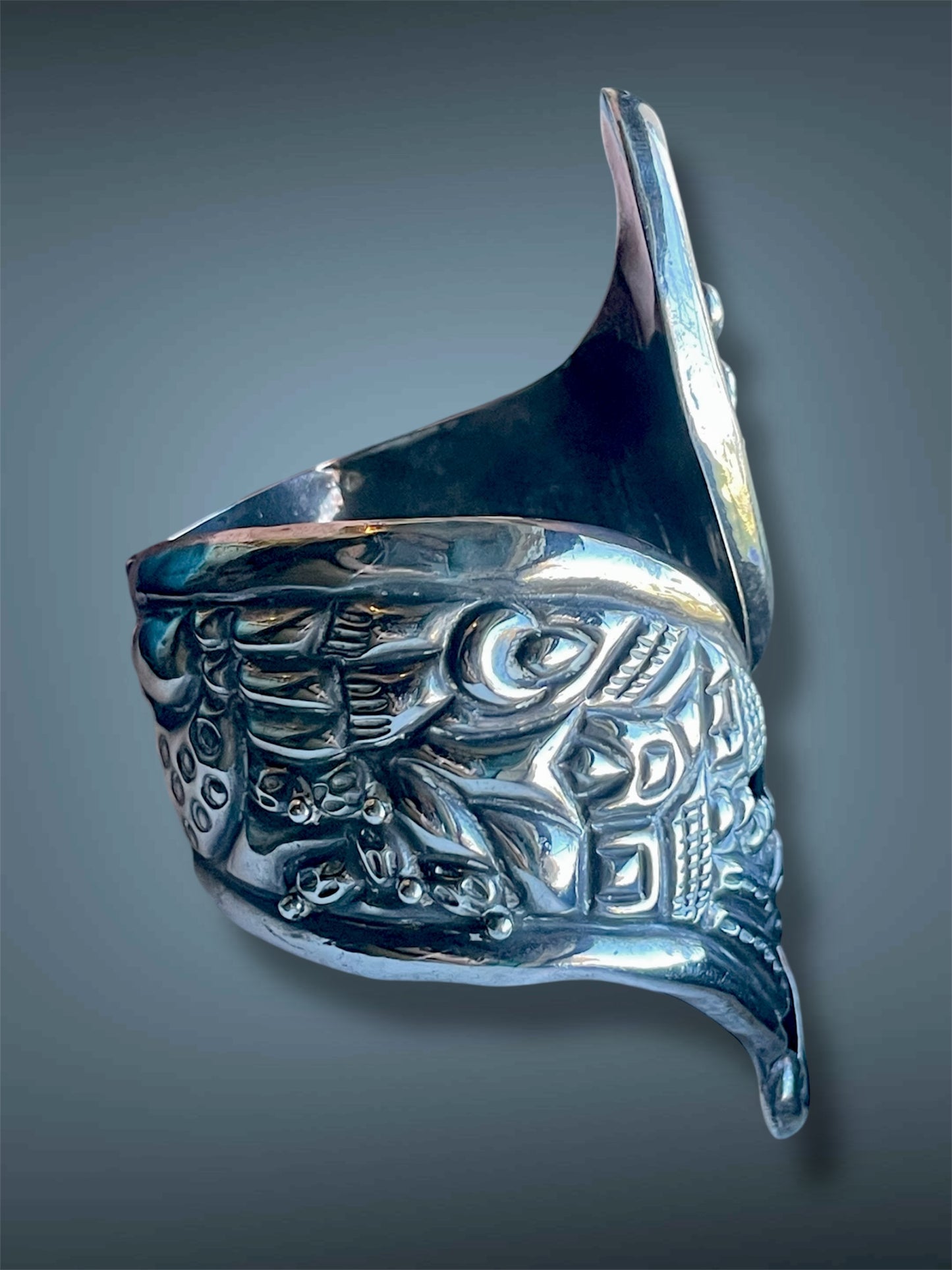
Sterling Silver Repoussé Hollow-work Taxco Mexico Scenic Hinged Clamper Bypass Bracelet
Couldn't load pickup availability
Incredible vintage 1950’s Taxco, Mexico sterling silver storyteller repoussé, hollow work hinged clamper bypass bangle bracelet. Very detailed and intricate, hand done repoussé hollow work design of a street scene in Mexico. Has cactus, houses, gauchos in ponchos and large sombreros. These style of bracelet are often referred to as “Storyteller” bracelets, as the silversmith artists who created them used the scenery around them and things from daily life to tell the story of their life and times. An obviously expert hand of a silver master created this piece. Hinge spring is tight and rebounds well. Hallmarked on the inside “Sterling 925” in an upward arch, “Taxco MEX” in a downward arch and C.P. in the center; as well as the Eagle 3 mark above. An extremely collectible piece from a revered place and time.
Measurements:
Inner circumference/length: 6”-7” (while hinge is completely shut tight and bypass slightly overlapping 6”. Has adjustable length due to spring hinge and fits comfortably up to 7”)
Face height end to end of both sides: 4.25”
Width of bracelet 40mm on sides that tapers down to a swirling point on each end of 10mm.
These stamps identify your piece as authentic vintage Mexican silver from the mid-20th century. The Taxco Mexico and 925 marks indicate it was crafted in Taxco, Mexico, using standard 92.5% sterling silver. The Eagle 3 is a government assay mark used between 1948 and 1976.
The Eagle 3 (or '3' within a silhouetted eagle stamp) is highly collectible. It holds specific meaning for these vintage pieces.